Provenance
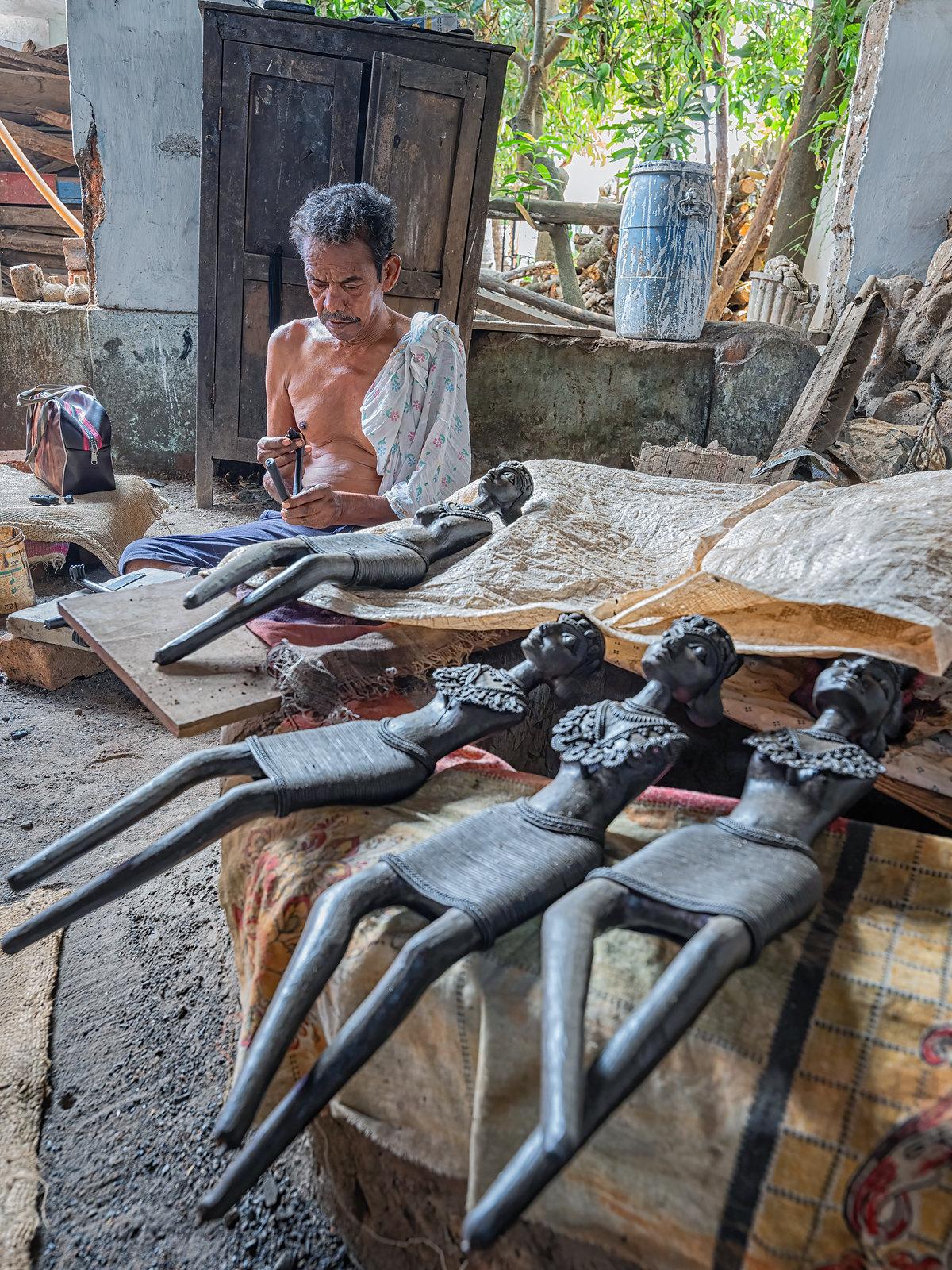
The cast metal in this house is made in Bastar, Chhattisgarh, by the artisan families we work with, using a method that has no mechanised step.
01 Origin
Dhokra is cast once. The mould has to be broken to reach the object inside it, so no two pieces can be identical and no piece can be made twice. That is not a constraint we work around. It is the reason we work this way.
02 Provenance
Origin
Bastar, in Chhattisgarh, central India. The cast-metal work in this collection is made there.
Method
Dhokra — lost-wax casting in clay, wax and brass. The method has no mechanised step.
Metal
Brass, poured molten into a clay mould that is fired once, opened once, and never used again.
Hands
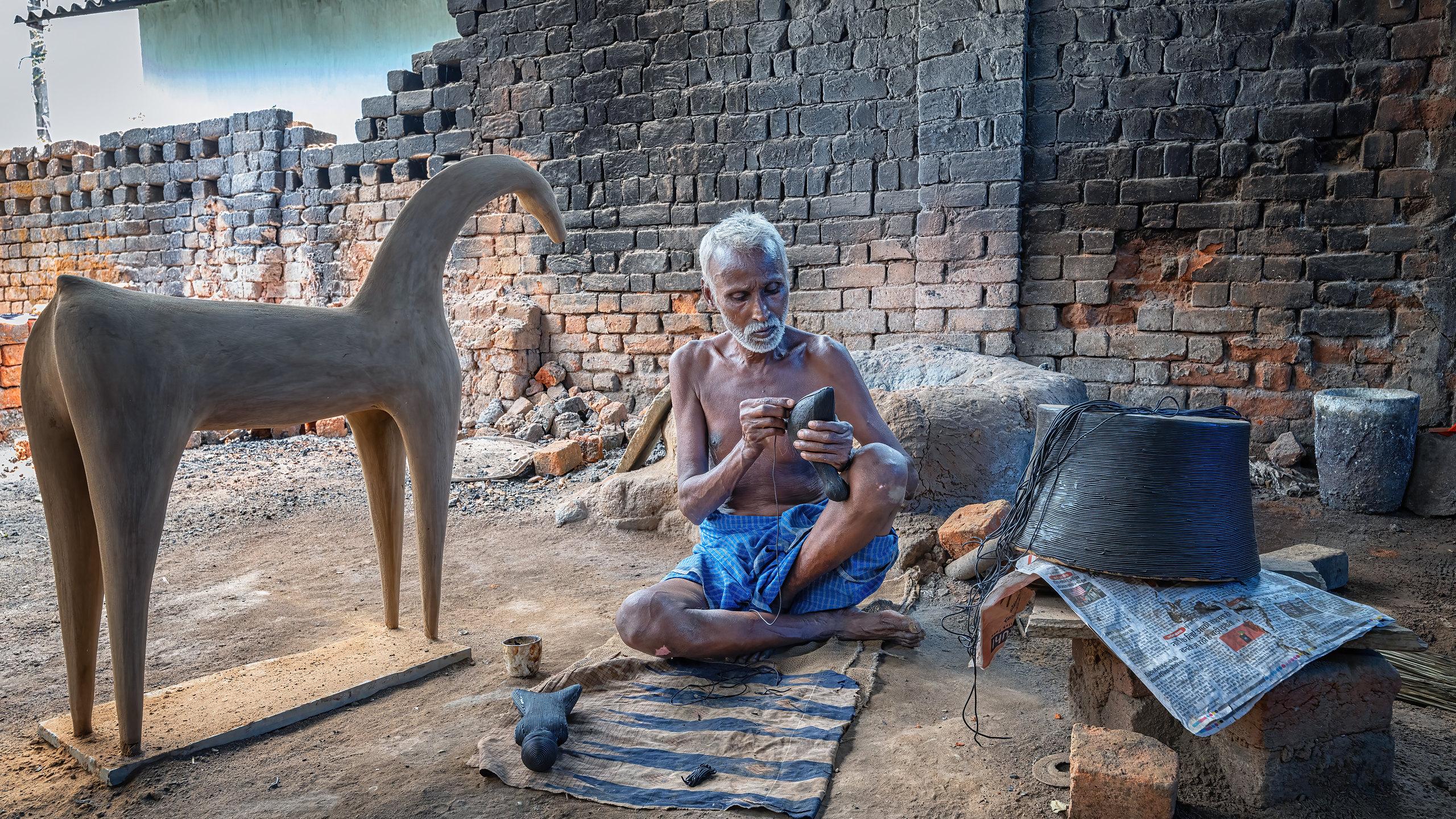
The artisan families we work with. Every object is credited to the method that made it and the people who hold it.
03 The Lost-Wax Method
The Core
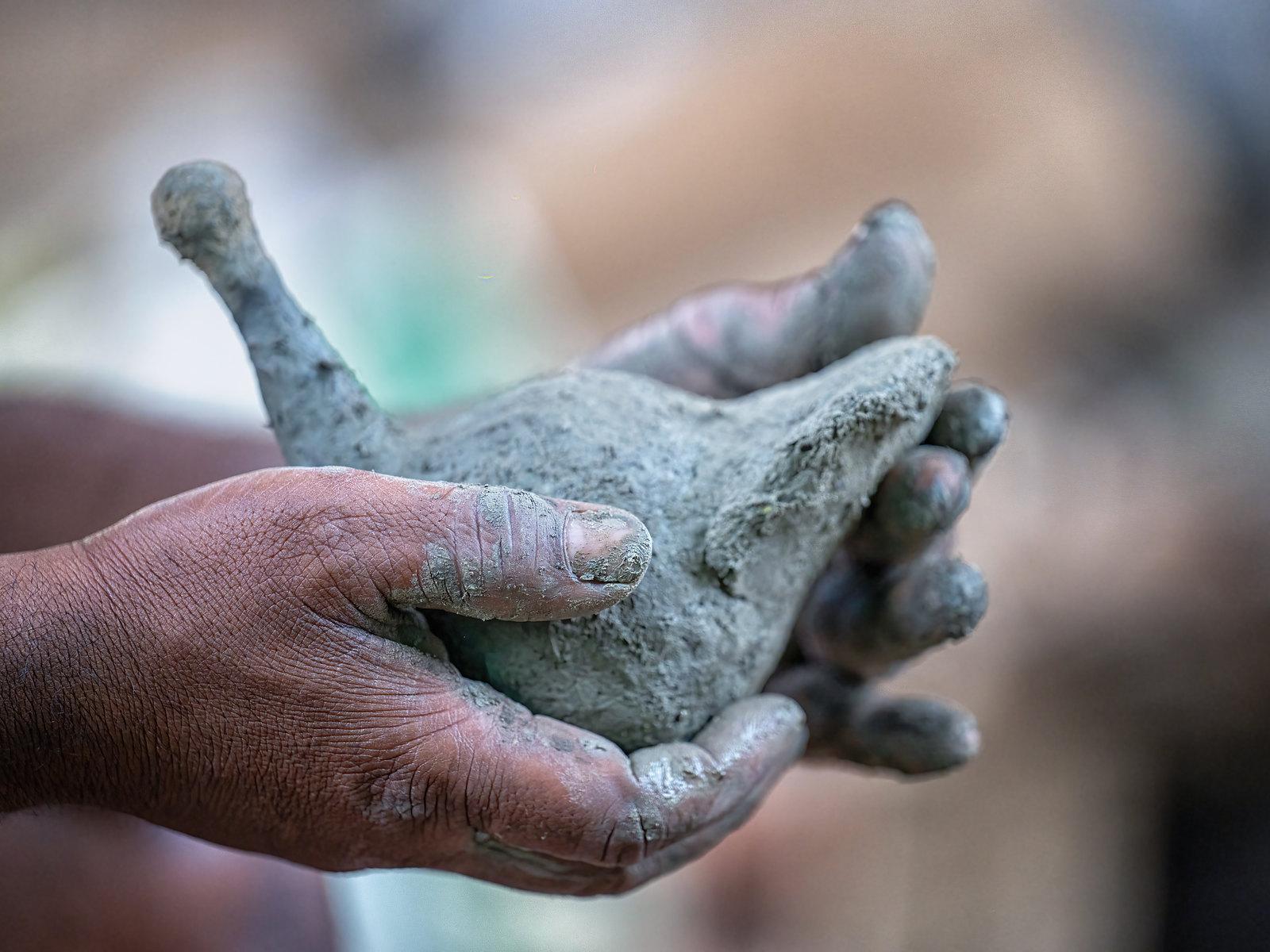
The form is built first in clay and left to dry. Everything that follows is laid over it, and it is the only part of the object that will never be seen.
The Thread
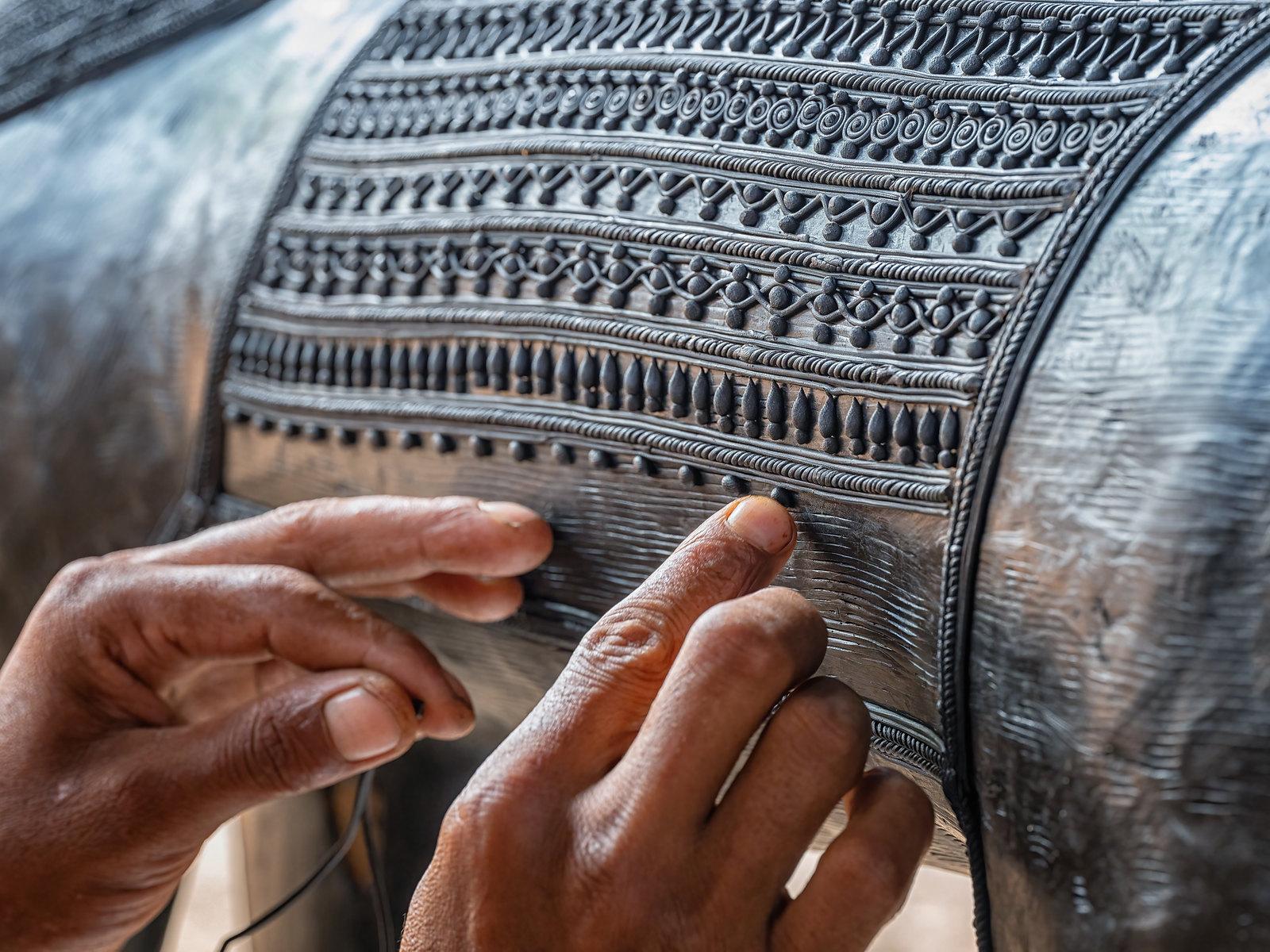
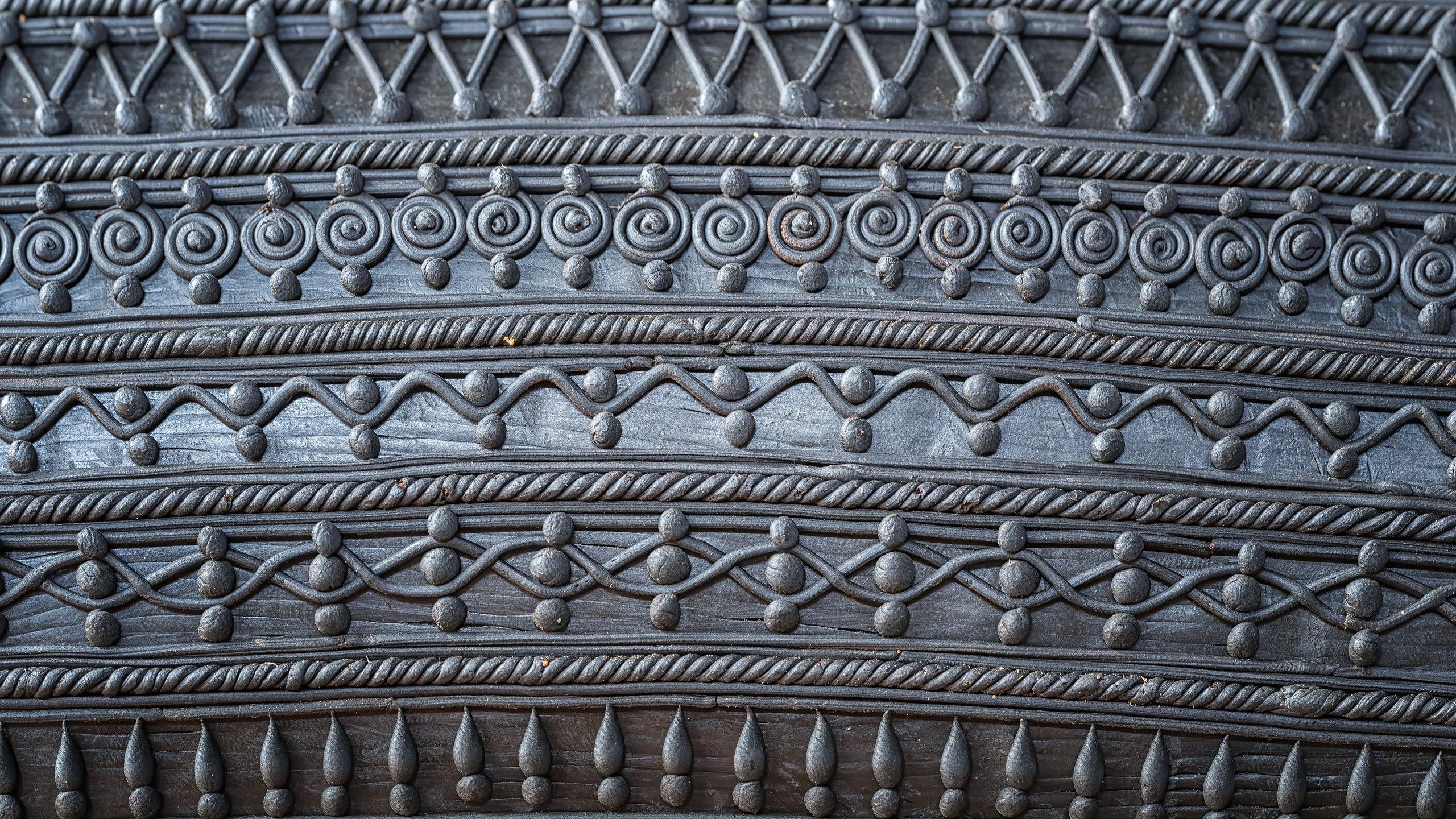
Beeswax and resin are drawn into a fine thread and wound over the core by hand, a line at a time. The thread is the surface — what is wound now is what the finished brass will show.
The Fire
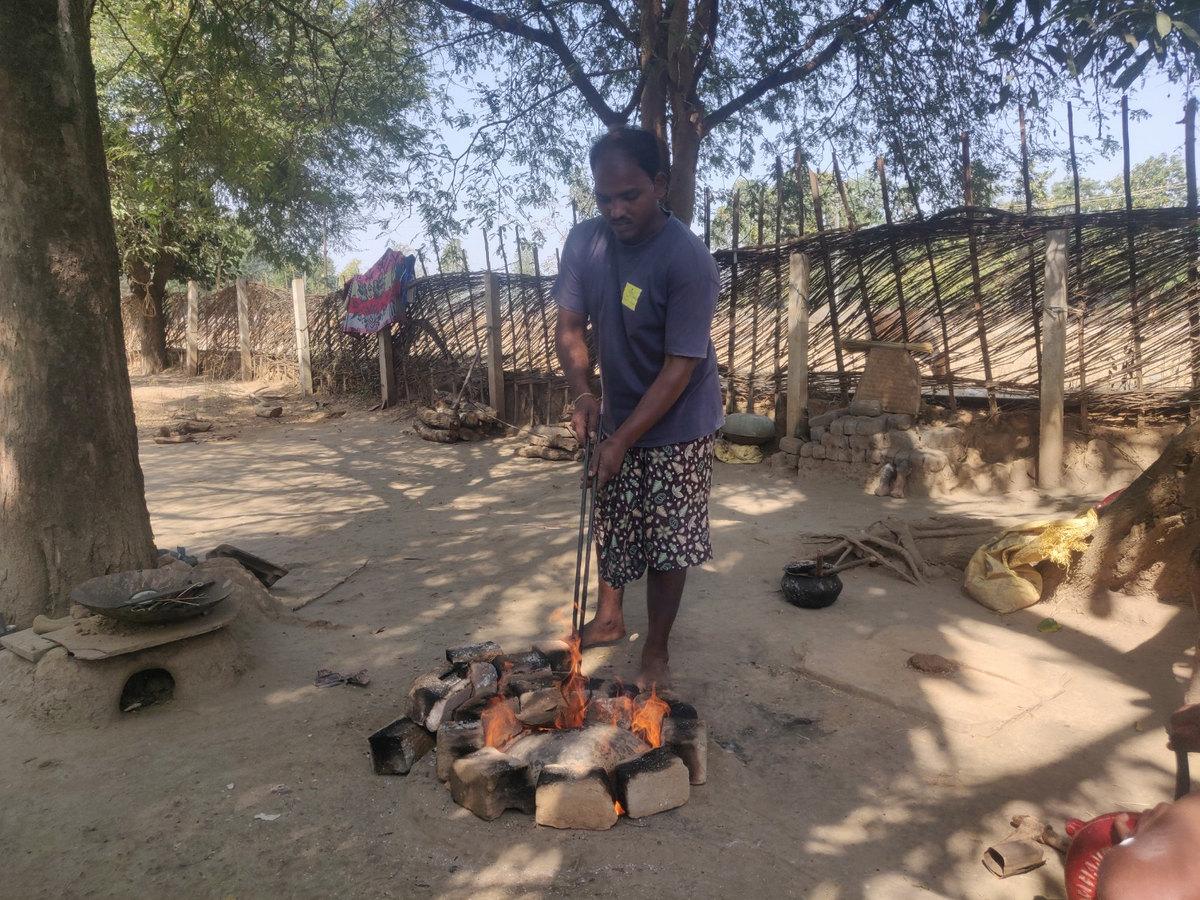
A second skin of clay is packed over the wax and fired. The wax runs out, the brass goes in, and the mould is broken open to reach what is inside.
Opens on YouTube
04 Digitisation
A file is not the method
A wound wax surface can be photographed, scanned, printed and reproduced without limit. What gets reproduced is the pattern. The decision behind each thread is not in the file, because it was never information in the first place.
Skill is held in practice
A method survives where it is worked, not where it is recorded. An archive of Dhokra preserves a description of Dhokra. Commissioning it preserves the thing described.
Demand is the preservation
The craft continues where there is work for it. The house buys that work, credits it, and designs objects that cannot be made any other way. That is the whole of our contribution and we would rather state it plainly than dress it up.
05 The Ecosystem
What the method costs
Dhokra is older than every part of the supply chain that would now be built around it.
The mould is clay, dug and mixed where the work is done. The wax is beeswax and tree resin. The kiln is a fire in the ground. The metal is brass, often reclaimed.
Nothing on that list arrives on a truck. Nothing is left over that the next casting cannot take. It is not a position the house adopted — it is simply what the method has always been, and it is one more reason not to modernise it.