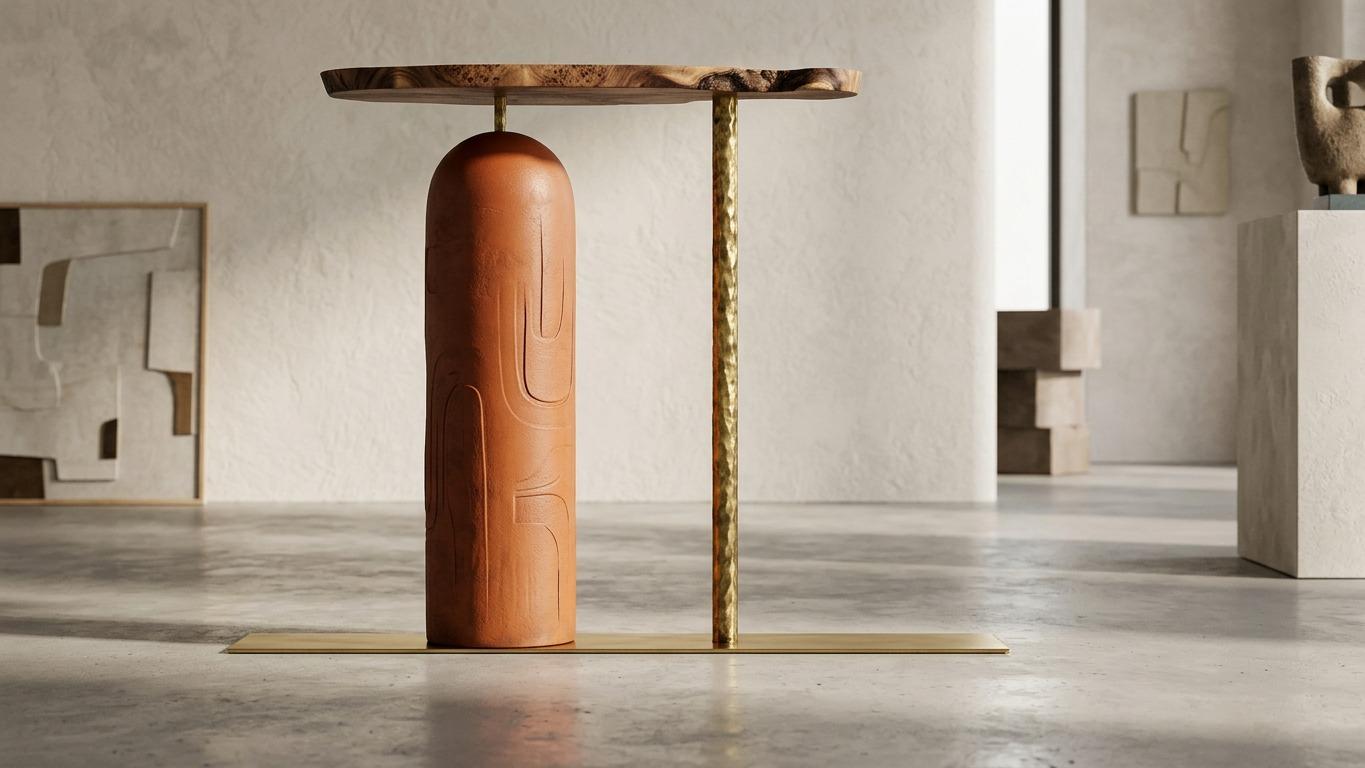
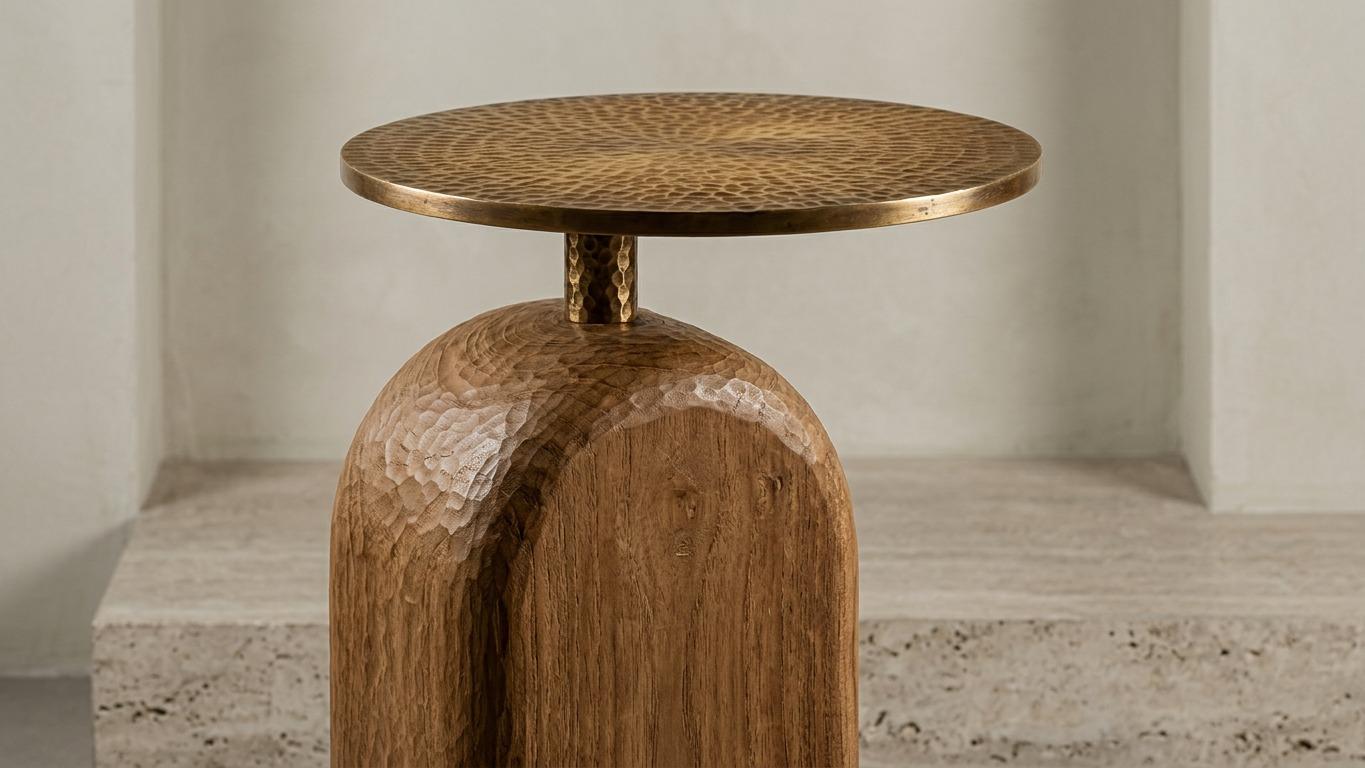
The line before the object
Every piece is settled as a flat elevation long before a material is chosen.
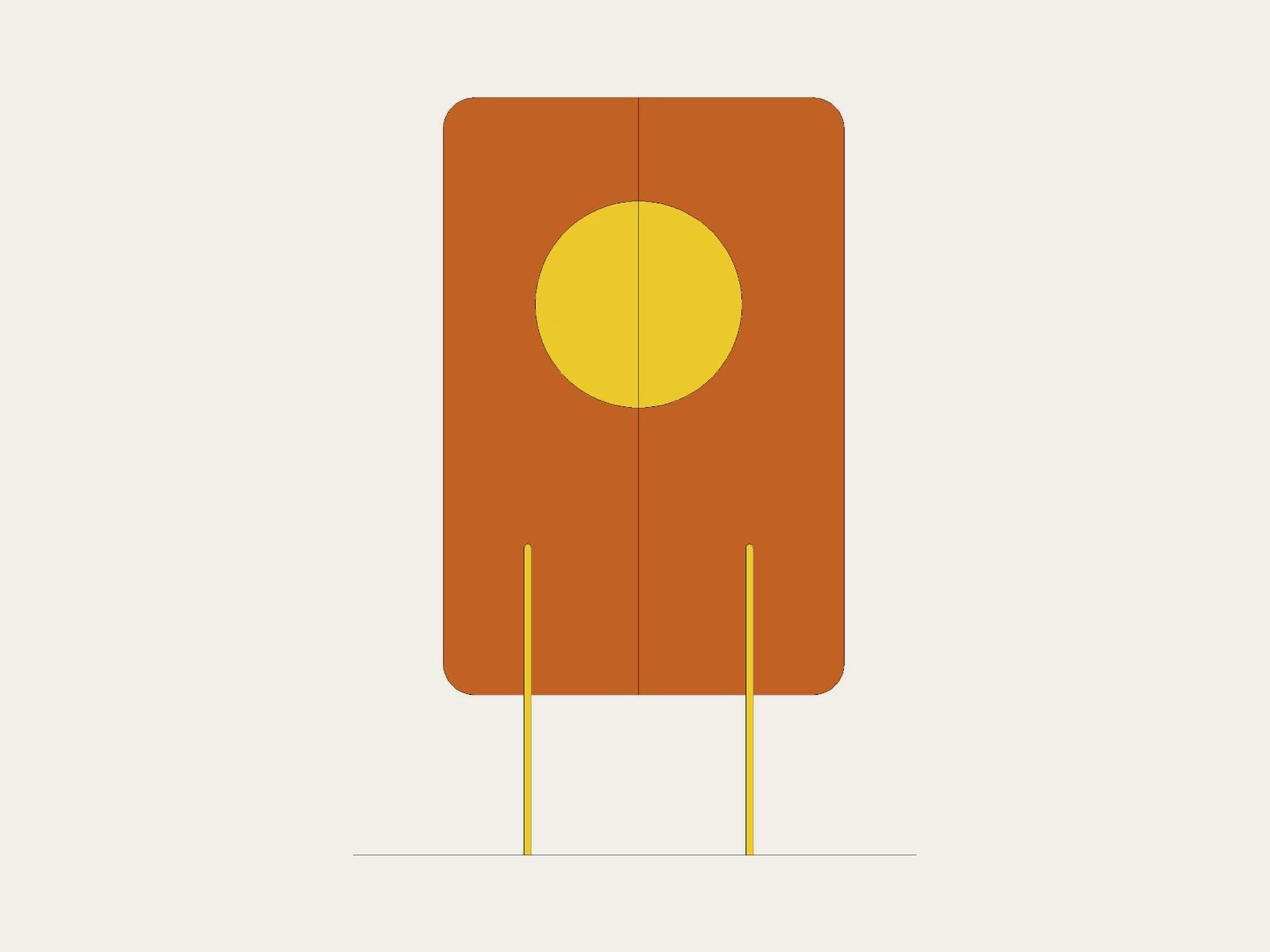
The drawings look almost naive. Flat colour, no shading, no material. A rectangle, a circle, two legs. They are made that way deliberately.
Proportion is the only thing a drawing can settle honestly. Once walnut is in the room, the eye starts forgiving things: a grain figure carries a weak silhouette, a brass highlight rescues a heavy base. Working flat removes the rescue. If the shape does not hold in two colours, it will not hold in three materials.
So the elevation is finished first, and it is finished as an argument about proportion alone. Only then does the piece go to the bench, where the maker's hand decides everything the line could not.
You can see both moments on the Method section of the collection: the same piece, drawn and then realised.